

 UTAH EDUCATION NETWORK

- PreK-12 Education
Essentials for Teachers
General Resources
Resources by Subject
- Higher Education
Tools for Higher Ed
Resources and Partners
Resources and services for Utah Higher Education faculty and students such as Canvas and collegEmedia. -
Community
Public Libraries
Parents
Career Ed
- Professional Development
UEN Courses
USBE Courses
Tech Discussions
- UEN-TV
Watch UEN-TV
Information
Local Productions
UEN-TV is operated by the Utah Education Network. Our goal is to educate, engage, and enrich the lives of Utah residents through broadcast programs and services. - Distance Education
On-Demand Support
800-863-3496, opt. 1, opt. 1
Mon-Fri 6:00 AM-10:00 PM
Or e-mail us: ivc-ops@uen.orgTraining Resources
- All Training Resources
- IVC Resources
- CMS Web App (CWA)
- WebEx Resources
- Zoom Resources
- Canvas Resources
Additional Info
Tools

The Utah Education Network (UEN) uses various systems and tools to deliver distance education classes to Utah students. - Network
Tech Services
(800) 863-3496Operations Center
801-585-7440
Staff DirectoryUEN Security Office
801-585-9888
Staff DirectoryTechnical Services Support Center (TSSC)
800-863-3496
Staff DirectoryProjects & Services
Network Groups
Network Tools
- About UEN
Information
- CARES Act
- Information Booklet
- Staff Directory
- Network Map
- Jobs
- Technical Advocates
- Software Licensing
Eccles Broadcast Center
101 Wasatch Drive
Salt Lake City, UT 84112(800) 866-5852
(801) 585-6105 (fax)UETN Governance
 More K12 Education
 my.uen Login
 Forgot my.uen Login
 Curriculum Search
 Find a School
 Canvas Logins
 Find an Institution
 Teacher Tips
 PD Newsletter
 PDTV
PDTV UEN Homeroom
 Adobe
Adobe Canvas
 eMedia
 Google
 Nearpod
 Utah's Online School Library
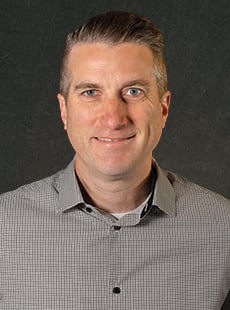 Justin
 Braxton
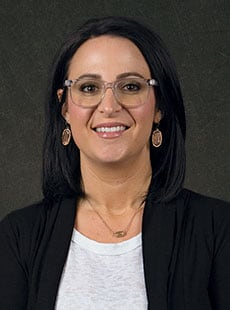 Dani
Dani Kayla
Kayla Katie
Katie Matthew
 Rob
Rob Val
Val UEN Print Schedule
 Monthly Highlights
 Give Us Feedback
 WebEx
WebEx Zoom
Zoom CMS Web App
 TMS
TMS YouTube
 Network Outages
 Network Traffic Map
 Speed Test
 Infrastructure Map
 Facebook
 Instagram
 LinkedIn
 News RSS
 Contact Us Form
 Dashboards
 Maps
Maps Widgets
Inchworm Measurement
 Printable Version
Main Core Tie
Mathematics Grade 1
Strand: MEASUREMENT AND DATA (1.MD.) Standard 1.MD.2
Additional Core Ties
Mathematics Grade 1
Strand: MEASUREMENT AND DATA (1.MD.) Standard 1.MD.1
Group Size
Large Groups
Summary
A children's book is used as a basis for activities which ask students to measure objects in the classroom and make comparisons about them.
Materials
Attachments
- Inchworm Measurement
- Inchworm/Centibug rulers
- Inch by Inch
- Math Journals
Additional Resources
Books
Inch by Inch, by Leo Lionni; ISBN 0688132839
How Big is a Foot?, by Rolf Myller; ISBN 044040495-9
Twelve Snails to One Lizard: A Tale of Mischief & Measurement, by Susan Hightower; ISBN- 10:0689804520 or ISBN-13:9780439154307
Counting on Frank, by Rod Clement; ISBN-10:039570393X or ISBN-13:978-0395703939
Measuring Penny, by Loreen Leedy; ISBN-10:0805065725 or ISBN-13:978-0805065725
Background for Teachers
Students will understand the attribute of length, develop a process of measuring, understand concepts related to units of measure, use estimating to measure, and learn how to use these processes in everyday life. This lesson also allows the teacher to integrate literature into the mathematics curriculum.
Intended Learning Outcomes
1. Demonstrate a positive learning attitude.
2. Develop social skills and ethical responsibility
Instructional Procedures
Invitation to Learn
Ask students to estimate about how many books tall they are. (Students could use their Math Journals to measure with.) Have some students share their approximations and then verify the results. Discuss with the students that what they just did was use a nonstandard unit of measurement to measure the length of their bodies. Following the investigation, briefly review what it means to measure the length of an object. Explain to the students that today they will be measuring objects in a different way, as opposed to using a ruler.
Instructional Procedures
- Read the story Inch by Inch to the class. Ask the students:
- Why would the inchworm be able to measure different birds?
- How does he measure?
- What do you think the inchworm will do when the nightingale asks the worm to measure her song?
- Can you measure a song?
- How can you measure a song?
- Explain to the students that they are going to measure just like the inchworm did. They need to choose a partner, or you may set this up ahead of time. Once they are with their partner, they need to get the tools they need to complete this activity. They will need an inchworm ruler for both students and one copy of the Inchworm Measurement blackline.
- Explain to the students that each team will find 10 objects in the classroom. They will estimate the length of each item, and then use their inchworms to measure each item. They will need to record their data on the Inchworm Measurement blackline.
Extensions
Curriculum Extensions/Adaptations/ Integration
- Advanced learners could use night crawlers in addition to their inchworms. Night crawlers could be equivalent to a foot. They could then repeat the activity using both night crawlers and inchworm measurements.
- Repeat this activity using centimeters and meters.
- By working in pairs, students who do not understand or have other special needs can still participate and have a successful learning experience.
Family Connections
- Have students take an Inchworm Measurement blackline home and measure 10 items there. Instruct them to bring the information back to school.
- Compare the items that the students measured in their homes. Find the smallest measurement as well as the largest measurement that was presented.
Assessment Plan
- Observe students' participation in class discussions and during the inchworm activity.
- As a class, have each group share their favorite recorded measurement for an object they found in the classroom. Record each object's name and its measurement on the board/or on a chart.
- Compare the measurements the students recorded.
- Collect the students' worksheets to check for reasonable estimates and measurements.
- Math Journal -- Have students record 5 items they could measure using inches and 5 items they would not choose to measure by inches.
Bibliography
Research Basis
Battista, M. (1994). Teacher Beliefs and the Reform Movement in Mathematics Education. Phi Delta Kappan.75(6) 462-470.
Recent efforts to make the mathematics curriculum consistent with the National Council of Teachers of Mathematics "Standards" will fail unless teachers' beliefs about mathematics change. Teacher educators, school officials, political leaders, and teachers themselves must first acknowledge a serious problem with the way our society views mathematics. The next step is reforming the institutions affecting teachers' education and working environment.
McClain, K., Cobb, P., Gravemeijer, K., and Estes, B. (1999). Developing Mathematical Reasoning Within the Context of Measurement. In Stiff, V. and Curcio, R. (Eds.) Developing Mathematical Reasoning in Grades K-12, 1999 Yearbook. (93-106). Reston, VA; National Council of Teachers of Mathematics.
This paper describes how one group of students developed personally meaningful ways to reason mathematically within the context of measurement. Episodes taken from a first grade classroom in which a 4-month teaching experiment was conducted are presented. One of the goals of the teaching experiment was to develop instructional sequences designed to support first grade students' construction of meaningful understandings for measurement and mental computation and estimation strategies for numbers up to 100. A primary focus when developing the instructional sequences was to support students' multiple interpretations of problem situations. The episodes provide a setting for the examination of measurement as a context for supporting students' construction of sophisticated ways to think and reason mathematically. The intent of the instructional sequences developed in the course of the teaching experiment is outlined first. The rest of the paper consists of descriptions of episodes from the classroom that highlight students' ability to reason mathematically while investigating issues related to measurement.
Updated: 02/05/2018