

 UTAH EDUCATION NETWORK

- PreK-12 Education
Essentials for Teachers
General Resources
- Higher Education
Tools for Higher Ed
Resources and Partners

Resources and services for Utah Higher Education faculty and students such as Canvas and collegEmedia. -
Community
Public Libraries
Parents
Career Ed
- Professional Development
UEN Courses
USBE Courses
Tech Discussions
- Broadcast
Watch
Information

Thank you for being a valued UEN-TV viewer. - Distance Education
On-Demand Support
800-863-3496, opt. 1, opt. 1
Mon-Fri 6:00 AM-10:00 PM
Or e-mail us: ivc@uen.orgTraining Resources
- All Training Resources
- IVC Resources
- CMS Web App (CWA)
- WebEx Resources
- Zoom Resources
- Canvas Resources
Additional Info
Tools

The Utah Education Network (UEN) uses various systems and tools to deliver distance education classes to Utah students. - Network
Tech Services
(800) 863-3496Operations Center
801-585-7440UEN Security Office
801-585-9888Technical Services Support Center (TSSC)
800-863-3496
Projects & Services
Network Groups
Network Tools
- About UEN
Information
Eccles Broadcast Center
101 Wasatch Drive
Salt Lake City, UT 84112(800) 866-5852
(801) 585-6105 (fax)UEN Governance
(800) 866-5852Contact UsAdministration
(801) 585-6013Education Services
(800) 866-5852Network Services
(800) 863-3496
 More K12 Education
 my.uen Login
 Forgot my.uen Login
 Curriculum Search
 Find a School
 Canvas Logins
 Find an Institution
 Teacher Tips
 PD Newsletter
 PDTV
PDTV UEN Homeroom
 Adobe
Adobe Canvas
 eMedia
 Google
 Nearpod
 Utah's Online School Library
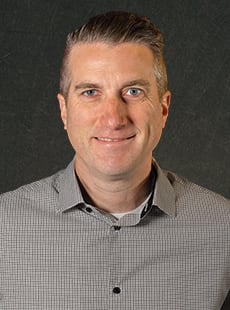 Justin
 Braxton
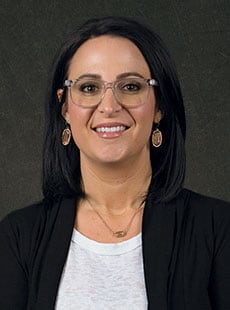 Dani
Dani Rob
Rob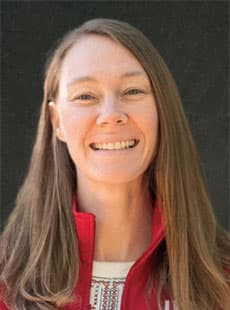 Val
Val Contact Us
 WebEx
WebEx Zoom
Zoom CMS Web App
 TMS
TMS YouTube
 Network Outages
 Network Traffic Map
 Speed Test
 Infrastructure Map
 Facebook
 Instagram
 LinkedIn
 News RSS
 Contact Us Form
 Dashboards
 Maps
Maps Widgets
 Community & Public Health
 Printable Version (pdf)
 Course Introduction
Core Standards of the Course
STRAND 1
Understand the role of community and public health in our environment.
Standard 1
Describe the history of community and public health.
Standard 2
Evaluate the relevance and impact of community and public health on our daily lives.
Standard 3
Compare and contrast the common features of community health and public health.
Standard 4
Identify the essential services and job opportunities within public health and the role they play in the community.
-
Hospitals
-
Mental health clinics
-
Schools
-
Corporate wellness
-
Health departments
-
Health insurance companies
-
Government organizations
-
Health related non-profit organizations
STRAND 2
Understand the Social Determinants of Health (SDoH) and their impact on the health of a community.
Standard 1
Identify conditions of concern to the health of the individual or community that have a major impact on people's health, well-being, and quality of life.
-
Social Determinants of Health (SDoH).
-
Healthcare accessibility and quality
-
Other impacts to Social Determinants of Health.
Standard 2
Identify and analyze public health and intervention strategies currently being used within local communities.
Standard 3
Using empirical evidence, describe a practice for making decisions related to Social Determinants of health and individual intervention strategies.
STRAND 3
Understand the influence of data on community and public health, where to locate that data, how to evaluate data validity, and the impact of data bias.
Standard 1
Identify industry recognized professional sources for data.
Standard 2
Explain data collection strategies used by community and public health professionals and which strategies yield the most reliable data.
Standard 3
Evaluate how data is used to influence community and public health interventions, including strategies to ensure that data is not being used to inappropriately affect the decisions and behavior of stakeholders and target populations, and/or populations at large.
STRAND 4
Explore the careers related to community and public health.
Standard 1
Identify the common careers in community and public health.
-
Community Health Worker (CHW)
-
Wellness Coach
-
Epidemiologist
-
Community Health Educator
-
Public Health Educator
-
Program Directors
-
Corporate Wellness Director
-
Fitness Specialist
Standard 2
Identify settings for job opportunities in community and public health.
-
Hospitals
-
Mental health clinics
-
Schools
-
Corporations/Businesses
-
Health departments
-
Health insurance companies
-
Government organizations
-
Health related non-profit organizations
Standard 3
Analyze characteristics needed in community and public health.
-
Interpersonal communication
-
Relationship building
-
Care coordinating
-
Community outreach
-
Culture and linguistic competency
-
Advocacy skills
-
Empathy
-
Compassion for others
-
Trustworthiness
-
Persistence
-
Resourcefulness
-
Professionalism
Performance Skills
Select one of the following:
-
Students will use a Social Determinant of Health (SDoH) to do the following:
- Research topic using at least three different professional sources for data.
- Locate and examine data related to the SDoH of choice.
- Define and describe the SDoH chosen.
- How influential is the SDoH in impacting health outcomes?
- What interventions have been identified and implemented?
- How successful were the interventions?
- What jobs/careers would be related to the findings?
- Based on information found, form a conclusion on potential improvements for future application.
-
Create a presentation of findings. Could include but not limited to:
-
Create a project based on the guidelines contained for one of the following HOSA competitive events (HOSA.org - Competition and Guidelines):
-
Communication
-
Problem Solving
-
Teamwork
-
Critical Thinking
-
Dependability
-
Accountability
-
Legal Requirements/expectations
 http://www.uen.org - in partnership with Utah State Board of Education
(USBE) and Utah System of Higher Education
(USHE). Send questions or comments to USBE
Specialist -
MAREN
HANSEN
and see the CTE/Health Science & Human Services website. For
general questions about Utah's Core Standards contact the Director
-
THALEA
LONGHURST.
These materials have been produced by and for the teachers of the
State of Utah. Copies of these materials may be freely reproduced
for teacher and classroom use. When distributing these materials,
credit should be given to Utah State Board of Education. These
materials may not be published, in whole or part, or in any other
format, without the written permission of the Utah State Board of
Education, 250 East 500 South, PO Box 144200, Salt Lake City, Utah
84114-4200.
http://www.uen.org - in partnership with Utah State Board of Education
(USBE) and Utah System of Higher Education
(USHE). Send questions or comments to USBE
Specialist -
MAREN
HANSEN
and see the CTE/Health Science & Human Services website. For
general questions about Utah's Core Standards contact the Director
-
THALEA
LONGHURST.
These materials have been produced by and for the teachers of the
State of Utah. Copies of these materials may be freely reproduced
for teacher and classroom use. When distributing these materials,
credit should be given to Utah State Board of Education. These
materials may not be published, in whole or part, or in any other
format, without the written permission of the Utah State Board of
Education, 250 East 500 South, PO Box 144200, Salt Lake City, Utah
84114-4200.