

 UTAH EDUCATION NETWORK

- PreK-12 Education
Essentials for Teachers
General Resources
- Higher Education
Tools for Higher Ed
Resources and Partners

Resources and services for Utah Higher Education faculty and students such as Canvas and collegEmedia. -
Community
Public Libraries
Parents
Career Ed
- Professional Development
UEN Courses
USBE Courses
Tech Discussions
- Broadcast
Watch
Information

Thank you for being a valued UEN-TV viewer. - Distance Education
On-Demand Support
800-863-3496, opt. 1, opt. 1
Mon-Fri 6:00 AM-10:00 PM
Or e-mail us: ivc@uen.orgTraining Resources
- All Training Resources
- IVC Resources
- CMS Web App (CWA)
- WebEx Resources
- Zoom Resources
- Canvas Resources
Additional Info
Tools

The Utah Education Network (UEN) uses various systems and tools to deliver distance education classes to Utah students. - Network
Tech Services
(800) 863-3496Operations Center
801-585-7440UEN Security Office
801-585-9888Technical Services Support Center (TSSC)
800-863-3496
Projects & Services
Network Groups
Network Tools
- About UEN
Information
Eccles Broadcast Center
101 Wasatch Drive
Salt Lake City, UT 84112(800) 866-5852
(801) 585-6105 (fax)UEN Governance
(800) 866-5852Contact UsAdministration
(801) 585-6013Education Services
(800) 866-5852Network Services
(800) 863-3496
 More K12 Education
 my.uen Login
 Forgot my.uen Login
 Curriculum Search
 Find a School
 Canvas Logins
 Find an Institution
 Teacher Tips
 PD Newsletter
 PDTV
PDTV UEN Homeroom
 Adobe
Adobe Canvas
 eMedia
 Google
 Nearpod
 Utah's Online School Library
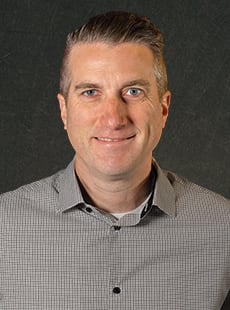 Justin
 Braxton
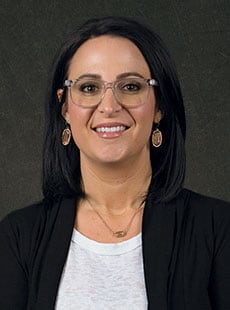 Dani
Dani Rob
Rob Val
Val Contact Us
 WebEx
WebEx Zoom
Zoom CMS Web App
 TMS
TMS YouTube
 Network Outages
 Network Traffic Map
 Speed Test
 Infrastructure Map
 Facebook
 Instagram
 LinkedIn
 News RSS
 Contact Us Form
 Dashboards
 Maps
Maps Widgets
 Corrections (formerly Corrections, Introduction)
 Printable Version (pdf)
 Course Introduction
Core Standards of the Course
STRAND 1
Students will be able to understand the Corrections (formerly Corrections, Introduction) system, history, and administration of Corrections (formerly Corrections, Introduction) in our criminal justice system.
Standard 1
Identify the role of Corrections (formerly Corrections, Introduction) in society.
Standard 2
Define the philosophy of Corrections (formerly Corrections, Introduction).
Standard 3
Explore a brief history of Corrections (formerly Corrections, Introduction).
Standard 4
Describe Correction officer's authority in the United States.
Standard 5
Discuss the Bill of Rights within Corrections (formerly Corrections, Introduction).
STRAND 2
Students will be able to understand the law, Constitution, and prisoner rights.
Standard 1
Compare and contrast Utah law and Federal law as it relates to Corrections (formerly Corrections, Introduction)
Standard 2
Identify prisoner's constitutional rights.
Standard 3
Identify the classification of criminal offences.
STRAND 3
Students will be able to understand the booking process, pre-trial release, sentencing proceedings and guidelines.
Standard 1
Describe the booking process.
Standard 2
Outline the pre-trial release process and factors.
Standard 3
Describe the presentence investigation process.
Standard 4
Identify factors influencing the sentence (aggravating/mitigating).
Standard 5
Identify the impact of plea bargaining on sentencing decisions.
Standard 6
Identify the differences between determinant and indeterminant sentences.
STRAND 4
Students will be able to understand the alternatives to incarceration.
Standard 1
Identify diversion and its impact on Corrections (formerly Corrections, Introduction).
Standard 2
Outline and distinguish between the role of probation and parole.
Standard 3
List and identify other alternatives to incarceration.
Standard 4
Describe the role of community Corrections (formerly Corrections, Introduction).
Standard 5
Explain the impact of effective Corrections (formerly Corrections, Introduction) on recidivism rates.
STRAND 5
Students will be able to understand the function and differences between prisons and jails.
Standard 1
Identify the purpose and operation of jails.
Standard 2
Identify the purpose and operation of prisons.
Standard 3
List the different inmate classifications for each of the different incarceration options.
Standard 4
Describe inmate security threat groups (gangs) and prisoner subculture.
Standard 5
Describe the demographics of inmate populations in prisons and jails in the U.S., including gender, sexual orientation, age, race, ethnicity, and socio-economic status.
Standard 6
Describe the history and role of capital punishment and its various forms as practiced in the U.S.
STRAND 6
Students will be able to understand the juvenile justice system of Corrections (formerly Corrections, Introduction).
Standard 1
Distinguish between treatment of adults and juveniles in the criminal justice system.
Standard 2
Describe the role of juvenile probation
Standard 3
Identify juvenile disposition (sentencing) options.
Standard 4
Identify juvenile detention options.
STRAND 7
Students will be able to understand Corrections (formerly Corrections, Introduction) as an occupation.
Standard 1
Identify the positive and negative aspects.
Standard 2
Explore career opportunities and job assignments.
Standard 3
Describe the difference between civilian and sworn positions and opportunities.
Standard 4
Outline the steps and requirements to become a Corrections (formerly Corrections, Introduction) Officer.
-
Communication
-
Problem Solving
-
Teamwork
-
Critical Thinking
-
Dependability
-
Accountability
-
Legal Requirements/Expectations
 http://www.uen.org - in partnership with Utah State Board of Education
(USBE) and Utah System of Higher Education
(USHE). Send questions or comments to USBE
Specialist -
MAREN
HANSEN
and see the CTE/Public Service & Safety website. For
general questions about Utah's Core Standards contact the Director
-
THALEA
LONGHURST.
These materials have been produced by and for the teachers of the
State of Utah. Copies of these materials may be freely reproduced
for teacher and classroom use. When distributing these materials,
credit should be given to Utah State Board of Education. These
materials may not be published, in whole or part, or in any other
format, without the written permission of the Utah State Board of
Education, 250 East 500 South, PO Box 144200, Salt Lake City, Utah
84114-4200.
http://www.uen.org - in partnership with Utah State Board of Education
(USBE) and Utah System of Higher Education
(USHE). Send questions or comments to USBE
Specialist -
MAREN
HANSEN
and see the CTE/Public Service & Safety website. For
general questions about Utah's Core Standards contact the Director
-
THALEA
LONGHURST.
These materials have been produced by and for the teachers of the
State of Utah. Copies of these materials may be freely reproduced
for teacher and classroom use. When distributing these materials,
credit should be given to Utah State Board of Education. These
materials may not be published, in whole or part, or in any other
format, without the written permission of the Utah State Board of
Education, 250 East 500 South, PO Box 144200, Salt Lake City, Utah
84114-4200.