

 UTAH EDUCATION NETWORK

- PreK-12 Education
Essentials for Teachers
General Resources
Resources by Subject
- Higher Education
Tools for Higher Ed
Resources and Partners

Resources and services for Utah Higher Education faculty and students such as Canvas and collegEmedia. -
Community
Public Libraries
Parents
Career Ed
- Professional Development
UEN Courses
USBE Courses
Tech Discussions
- UEN-TV
Information
Local Productions

UEN-TV is operated by the Utah Education Network. Our goal is to educate, engage, and enrich the lives of Utah residents through broadcast programs and services. - Distance Education
On-Demand Support
800-863-3496, opt. 1, opt. 1
Mon-Fri 6:00 AM-10:00 PM
Or e-mail us: ivc@uen.orgTraining Resources
- All Training Resources
- IVC Resources
- CMS Web App (CWA)
- WebEx Resources
- Zoom Resources
- Canvas Resources
Additional Info
Tools

The Utah Education Network (UEN) uses various systems and tools to deliver distance education classes to Utah students. - Network
Tech Services
(800) 863-3496Operations Center
801-585-7440UEN Security Office
801-585-9888Technical Services Support Center (TSSC)
800-863-3496
Projects & Services
Network Groups
Network Tools
- About UEN
Information
Eccles Broadcast Center
101 Wasatch Drive
Salt Lake City, UT 84112(800) 866-5852
(801) 585-6105 (fax)UEN Governance
(800) 866-5852Contact UsAdministration
(801) 585-6013Education Services
(800) 866-5852Network Services
(800) 863-3496
 More K12 Education
 my.uen Login
 Forgot my.uen Login
 Curriculum Search
 Find a School
 Canvas Logins
 Find an Institution
 Teacher Tips
 PD Newsletter
 PDTV
PDTV UEN Homeroom
 Adobe
Adobe Canvas
 eMedia
 Google
 Nearpod
 Utah's Online School Library
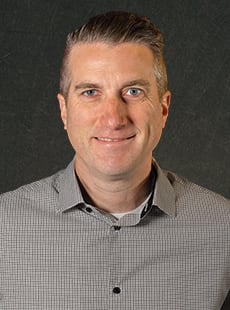 Justin
 Braxton
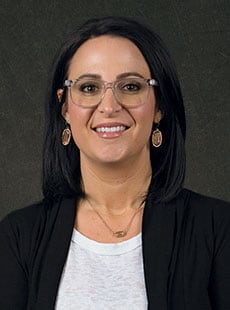 Dani
Dani Kayla
Kayla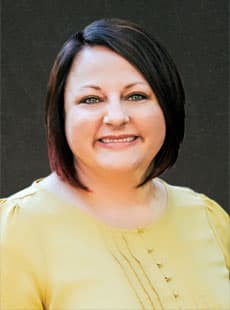 Katie
Katie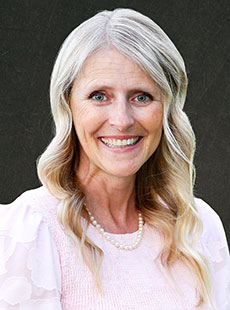 Lora
Lora Rob
Rob Val
Val Locally Produced
 Give Us Feedback
 WebEx
WebEx Zoom
Zoom CMS Web App
 TMS
TMS YouTube
 Network Outages
 Network Traffic Map
 Speed Test
 Infrastructure Map
 Facebook
 Instagram
 LinkedIn
 News RSS
 Contact Us Form
 Dashboards
 Maps
Maps Widgets
 Exploring Health Science
 Printable Version (pdf)
 Course Introduction
Core Standards of the Course
Strand 1
Demonstrate a well-rounded understanding of healthcare professions.
Standard 1
Compare and contrast health science career cluster pathways:
- Diagnostic Services
- Therapeutic Services
- Health Informatics
- Support Services
- Biotechnology Research and Development Services
Standard 2
Identify types of training levels, education, and credentials related to healthcare.Standard 3
Explore a career of interest.
- Use a career aptitude assessment tool for middle school students to identify student area of interest and aptitude. Options to consider using:
- Keys to Success – No cost.
- Research the educational/training requirements for a specific career of interest.
Performance Skills
included – see below.
Strand 2
Demonstrate an understanding of the importance of legal and ethical behavior related to healthcare.
Standard 1
Identify responsibilities in maintaining ethical standards, confidentiality, and the patient’s rights.
- HIPAA law
- Patient Care Partnership concepts – American Hospital Association document
Standard 2
Identify and define terms related to the legal and ethical aspects of the healthcare industry.
- Malpractice/negligence
- Consent
- Invasion of privacy
- Quackery
- Hippocratic Oath
- Cultural competency
- Integrity
Standard 3
Compare and contrast sympathy and empathy.
Strand 3
Demonstrate professional behaviors in the healthcare setting.
Standard 1
Demonstrate interpersonal communication skills.Standard 2
Demonstrate other professional behaviors.Standard 3
Demonstrate the use of basic medical terminology.
Strand 4
Apply basic scientific principles to the healthcare field.
Standard 1
Identify the levels of organization of the human body.Standard 2
Identify the different body systems to include basic structures and basic functions.
- Integumentary
- Skeletal
- Muscular
- Nervous
- Endocrine
- Respiratory
- Cardiovascular
- Lymphatic
- Digestive
- Urinary
- Reproductive
Standard 3
Describe the elements of disease transmission.Performance Skills
Performance Skill included – see below.
Strand 5
Perform basic healthcare skills.
Standard 1
Perform basic vital signs and measurements.
Strand 6
Introduce students to the Career and Technical Student Organization (CTSO) for students interested in careers in healthcare – HOSA: Future Health Professionals.
Standard 1
Explore the national and state HOSA websites.
- National site – hosa.org
- Utah site - https://www.uthosa.org
Standard 2
Identify Middle School competitions of interest.Standard 3
Explore HOSA leadership, and service opportunities.
- Identify HOSA officer positions and their role/function.
- Research current National HOSA Service Project.
- Identify HOSA scholarship options.
Performance Skills
Performance Skill included – see below.
1.
Create a Health Career Display-Middle School as per the HOSA competitive event guidelines.
2.
Demonstrate correct glove removal and disposal.
3.
Complete a project-based learning experience centered on a HOSA Middle School competitive event.
- Workplace Skills
- Professional dress
- Teamwork/Collaboration
- Communication – written and verbal
- Conflict resolution
- Time management
- Critical thinking
- Research methods
- Problem solving
- Integrity
- Legal requirements/expectations
 http://www.uen.org - in partnership with Utah State Board of Education
(USBE) and Utah System of Higher Education
(USHE). Send questions or comments to USBE
Specialist -
MAREN
HANSEN
and see the CTE/Health Science website. For
general questions about Utah's Core Standards contact the Director
-
THALEA
LONGHURST.
These materials have been produced by and for the teachers of the
State of Utah. Copies of these materials may be freely reproduced
for teacher and classroom use. When distributing these materials,
credit should be given to Utah State Board of Education. These
materials may not be published, in whole or part, or in any other
format, without the written permission of the Utah State Board of
Education, 250 East 500 South, PO Box 144200, Salt Lake City, Utah
84114-4200.
http://www.uen.org - in partnership with Utah State Board of Education
(USBE) and Utah System of Higher Education
(USHE). Send questions or comments to USBE
Specialist -
MAREN
HANSEN
and see the CTE/Health Science website. For
general questions about Utah's Core Standards contact the Director
-
THALEA
LONGHURST.
These materials have been produced by and for the teachers of the
State of Utah. Copies of these materials may be freely reproduced
for teacher and classroom use. When distributing these materials,
credit should be given to Utah State Board of Education. These
materials may not be published, in whole or part, or in any other
format, without the written permission of the Utah State Board of
Education, 250 East 500 South, PO Box 144200, Salt Lake City, Utah
84114-4200.