

 UTAH EDUCATION NETWORK

- PreK-12 Education
Essentials for Teachers
General Resources
Resources by Subject
- Higher Education
Tools for Higher Ed
Resources and Partners

Resources and services for Utah Higher Education faculty and students such as Canvas and collegEmedia. -
Community
Public Libraries
Parents
Career Ed
- Professional Development
UEN Courses
USBE Courses
Tech Discussions
- UEN-TV
Information
Local Productions

UEN-TV is operated by the Utah Education Network. Our goal is to educate, engage, and enrich the lives of Utah residents through broadcast programs and services. - Distance Education
On-Demand Support
800-863-3496, opt. 1, opt. 1
Mon-Fri 6:00 AM-10:00 PM
Or e-mail us: ivc@uen.orgTraining Resources
- All Training Resources
- IVC Resources
- CMS Web App (CWA)
- WebEx Resources
- Zoom Resources
- Canvas Resources
Additional Info
Tools

The Utah Education Network (UEN) uses various systems and tools to deliver distance education classes to Utah students. - Network
Tech Services
(800) 863-3496Operations Center
801-585-7440UEN Security Office
801-585-9888Technical Services Support Center (TSSC)
800-863-3496
Projects & Services
Network Groups
Network Tools
- About UEN
Information
Eccles Broadcast Center
101 Wasatch Drive
Salt Lake City, UT 84112(800) 866-5852
(801) 585-6105 (fax)UEN Governance
(800) 866-5852Contact UsAdministration
(801) 585-6013Education Services
(800) 866-5852Network Services
(800) 863-3496
 More K12 Education
 my.uen Login
 Forgot my.uen Login
 Curriculum Search
 Find a School
 Canvas Logins
 Find an Institution
 Teacher Tips
 PD Newsletter
 PDTV
PDTV UEN Homeroom
 Adobe
Adobe Canvas
 eMedia
 Google
 Nearpod
 Utah's Online School Library
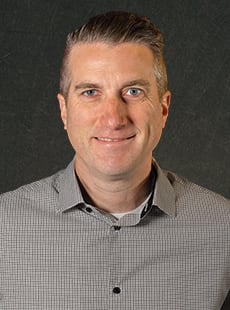 Justin
 Braxton
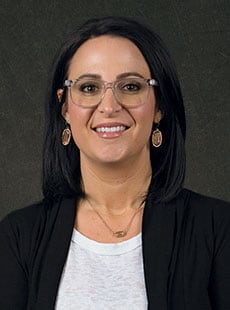 Dani
Dani Kayla
Kayla Katie
Katie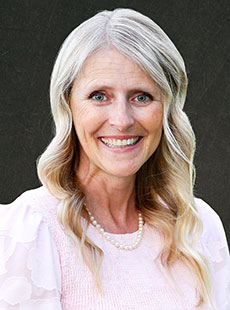 Lora
Lora Rob
Rob Val
Val Locally Produced
 Give Us Feedback
 WebEx
WebEx Zoom
Zoom CMS Web App
 TMS
TMS YouTube
 Network Outages
 Network Traffic Map
 Speed Test
 Infrastructure Map
 Facebook
 Instagram
 LinkedIn
 News RSS
 Contact Us Form
 Dashboards
 Maps
Maps Widgets
 English Language Arts Speech & Debate (2021)
 Course Preface
 Printable Version (pdf)
Core Standards of the Course
Strand 1: Research and Development
Students will read and collect research from textual evidence to prepare for debates.
Standard 1.1
Prepare for and present in a variety of speech and debate formats (see appendix)
Standard 1.2
Analyze current events and political atmosphere (e.g., domestic policy,economic policy, foreign policy, social climate).

Standard 1.3
Collaborate to define issues and develop strategies.
Standard 1.4
Research arguments to support substantive claims using a variety of primary and/or secondary sources including but not limited to historical, scientific, and technical texts:
- central idea
- discrepancies in content
- explanation for action or events
- points of view
- specialized vocabulary
- textual
Standard 1.5
Evaluate researched texts for validity, reliability, and credibility of source,content, and/or author.
Strand 2: Fundamentals
Students will analyze and evaluate various speech and debate formats to develop fundamental knowledge for application.
Standard 2.1
Compare and contrast classical and contemporary philosophers and their contributions to speech and debate.
Standard 2.2
Explain the historical and contemporary role that speech and debate play in democratic society (e.g., diplomacy, government policy, justice system, politics).
Standard 2.3
Discuss ethical dilemmas and practices as found in various speaking topics,contentions, and presentations.
Standard 2.4
Demonstrate ethical practices in speech and debate (e.g., behavior,courtesy, verbal and nonverbal communication).
Standard 2.5
Demonstrate effective communication skills in speech and debate:
- Speaking (e.g., framing questions, responding to questions, speaking extemporaneously, using appropriate language)
- Listening (e.g., critical and attentive listening demonstrated by note taking, critiquing)
- Nonverbal communication (e.g., attire, eye contact, facial expressions, gestures, proximity)
Standard 2.6
Analyze a variety of speech and debate structures for task, audience, and purpose.
Standard 2.7
Use speech and debate conventions appropriately (see appendix A).
Standard 2.8
Use speech and debate terminology effectively (see appendix A).
Standard 2.9
Identify, develop, and argue stock issues:
- Harm
- Inherency
- Significance
- Solvency
- Topicality
Standard 2.10
Apply critical thinking skills when researching, preparing, and presenting
- Causal arguments
- Logical fallacies
- Source validity
- Topic and analysis support using strong evidence
- Challenge the status quo and current policy proposals, using a variety of arguments and rhetorical devices
Strand 3: Performance and Evaluation
Students will demonstrate fundamental speaking and debating skills and evaluate best practices.
Standard 3.1
Apply principles of ethical communication appropriate to context:
- Academic honesty
- Bias
- Communication responsibility
- Plagiarism
- Respect for diversity
Standard 3.2
Identify and adjust behaviors and arguments based on evaluation paradigms (See appendix).
Standard 3.3
Present arguments using clear and concise language.
Standard 3.4
Demonstrate the process of refutation and cross examination in debate settings and provide effective rebuttals.
Standard 3.5
Demonstrate the ability to give and receive constructive criticism to self and peers.
Standard 3.6
Develop presentation skills to convey complex ideas:
- Extemporaneous speech
- Formal register
- Persuasive techniques
Standard 3.7
Analyze the reduction of communication barriers (see appendix).
Standard 3.8
Demonstrate mutual respect in interpersonal communication.
Standard 3.9
Demonstrate appropriate critical, empathetic, appreciative, and reflective listening skills in formal and informal situations:
- Active listening behaviors
- False assumptions
- Loaded terms
- Note-taking
 http://www.uen.org - in partnership with Utah State Board of Education
(USBE) and Utah System of Higher Education
(USHE). Send questions or comments to USBE
Specialist -
Naomi
Watkins
and see the Language Arts - Secondary website. For
general questions about Utah's Core Standards contact the Director
-
Jennifer
Throndsen.
These materials have been produced by and for the teachers of the
State of Utah. Copies of these materials may be freely reproduced
for teacher and classroom use. When distributing these materials,
credit should be given to Utah State Board of Education. These
materials may not be published, in whole or part, or in any other
format, without the written permission of the Utah State Board of
Education, 250 East 500 South, PO Box 144200, Salt Lake City, Utah
84114-4200.
http://www.uen.org - in partnership with Utah State Board of Education
(USBE) and Utah System of Higher Education
(USHE). Send questions or comments to USBE
Specialist -
Naomi
Watkins
and see the Language Arts - Secondary website. For
general questions about Utah's Core Standards contact the Director
-
Jennifer
Throndsen.
These materials have been produced by and for the teachers of the
State of Utah. Copies of these materials may be freely reproduced
for teacher and classroom use. When distributing these materials,
credit should be given to Utah State Board of Education. These
materials may not be published, in whole or part, or in any other
format, without the written permission of the Utah State Board of
Education, 250 East 500 South, PO Box 144200, Salt Lake City, Utah
84114-4200.